
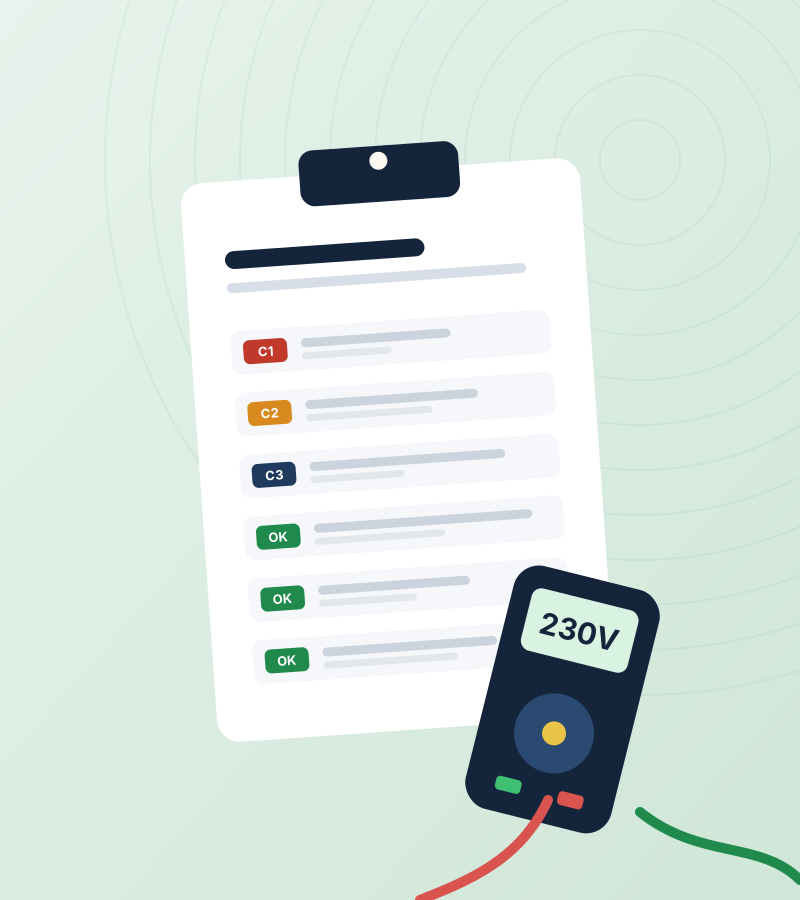
An Electrical Installation Condition Report (EICR) is a formal inspection and test of a property's fixed wiring, consumer unit, sockets, switches, lighting and other permanently connected equipment. It records the condition of the installation and identifies anything that is dangerous, potentially dangerous or that would benefit from improvement.
Whether you're a landlord meeting your legal obligations, buying an older home, or simply want peace of mind about your wiring, we'll carry out the inspection thoroughly and give you a report you can actually understand — with each observation explained and prioritised.
When to call us
- You're a landlord and your EICR is due or missing
- You're buying, selling or renovating an older property
- You've never had the wiring checked, or it was over ten years ago
- Your insurer, mortgage lender or letting agent has requested one
- You've noticed warning signs such as warm sockets or frequent tripping
- You run a business and need to show electrical safety compliance
What's involved
- 1Visual inspection of the consumer unit, wiring, accessories and earthing/bonding
- 2Testing of a representative sample of circuits (or all circuits where required)
- 3RCD testing and protective device verification
- 4Coded observations: C1 (danger present), C2 (potentially dangerous), C3 (improvement recommended), FI (further investigation)
- 5Overall Satisfactory / Unsatisfactory outcome
- 6Written report with recommended next inspection date
- 7Quotation for any remedial work required
Good to know
How often should an EICR be done?
IET guidance generally recommends a periodic inspection at least every 10 years for owner-occupied homes and at least every 5 years for rented homes and many commercial premises — or sooner if the inspector recommends it.
Understanding C1, C2, C3 and FI
C1 means danger is present and immediate action is needed. C2 means potentially dangerous and urgent remedial action is required. C3 is a recommendation for improvement. FI means further investigation is needed. Any C1, C2 or FI results in an Unsatisfactory report.
How much does an EICR cost?

Every job is different, so we price it once we understand what's needed. The main factors are:
- Number of circuits (usually the biggest factor)
- Property size, type and age
- Whether it's a single let, HMO or commercial premises
- Access to the consumer unit, loft and outbuildings
- Whether any remedial work is needed afterwards (quoted separately)
We explain charges before we attend and agree the price of any work with you before it starts. Sending photos in advance helps us quote more accurately.
EICR & Electrical Safety Inspections: FAQs
How long does an EICR take?
It depends on the size, age and condition of the installation. A typical flat or small house usually takes a few hours. Power will need to be switched off to circuits during testing, and we'll agree timings with you or your tenants in advance.
What happens if my EICR is unsatisfactory?
We'll explain each item and provide a quotation for remedial work. Once the work is complete, you'll receive written confirmation and the appropriate certification, so you can show the installation is now satisfactory.
Is an EICR the same as PAT testing?
No. An EICR covers the fixed electrical installation. PAT (portable appliance testing) covers plug-in appliances. Landlords and businesses may need to consider both.
Do you test every circuit?
We test the installation in line with BS 7671 and IET guidance. Where sample testing is used, the sample size and any limitations are recorded on the report.
EICR & Electrical Safety Inspections — areas covered

Available across Surrey, South West London, South East London, Croydon & North Surrey, Berkshire, West Kent, Sussex.
- Brighton
- Hove
- Portslade
- Shoreham-by-Sea
- Worthing
- Lewes
- Kingston upon Thames
- Surbiton
- Epsom
- Leatherhead
- Esher
- Walton-on-Thames
- Weybridge
- Guildford
- Woking
- Farnham
- Camberley
- Godalming
- Wimbledon
- Putney
- Wandsworth
- Clapham
- Dulwich
- Crystal Palace
- Lewisham
- Greenwich
- Croydon
- Purley
- Coulsdon
- Reading
- Bracknell
- Tunbridge Wells
- Tonbridge
- Sevenoaks